Current news
Why a Life in Belgium Is Valued Three Times Less Than in the USA
I was calmly eating my Belgian fries—perhaps one of Europe’s last undisputed contributions to world civilization—while watching the Flemish channel VTM. The sun was shining, the sky was clear, and that of course meant it was time for a national ritual: discussing climate change on television.
Because nothing pairs better with a warm, dry day than a panel of concerned experts explaining why everything is actually getting worse.
The news anchor, with the appropriate dose of mild existential concern, asked the question of the day: Why is Europe warming faster than other continents? A fair question. You would expect a complex answer about ocean currents, atmospheric dynamics, or perhaps decades of industrial legacy.
Instead, the explanation took a turn that nearly cost me my appetite.
According to the expert, Europe’s enthusiastic green policies may have… unintended side effects. Fewer emissions mean fewer particles in the air—particles that used to reflect sunlight and thus formed a kind of atmospheric “shield.” In other words: by cleaning the air, we may also be removing a protective layer against the sun.
At that moment, my fries became secondary. I was witnessing a philosophical paradox unfolding live on television: Europe, in its moral quest to save the planet, may be making itself more vulnerable to exactly what it is trying to combat.
You would almost expect a Nobel Prize for irony.
And so we naturally arrive at the thought experiment of the day. If fewer emissions reduce that protective layer, then the often-criticized “Drill Baby Drill” philosophy might deserve reconsideration—not as environmental damage, but as… climate management.
Absurd? Certainly. But no more absurd than pretending that complex systems respond linearly to idealistic policies.
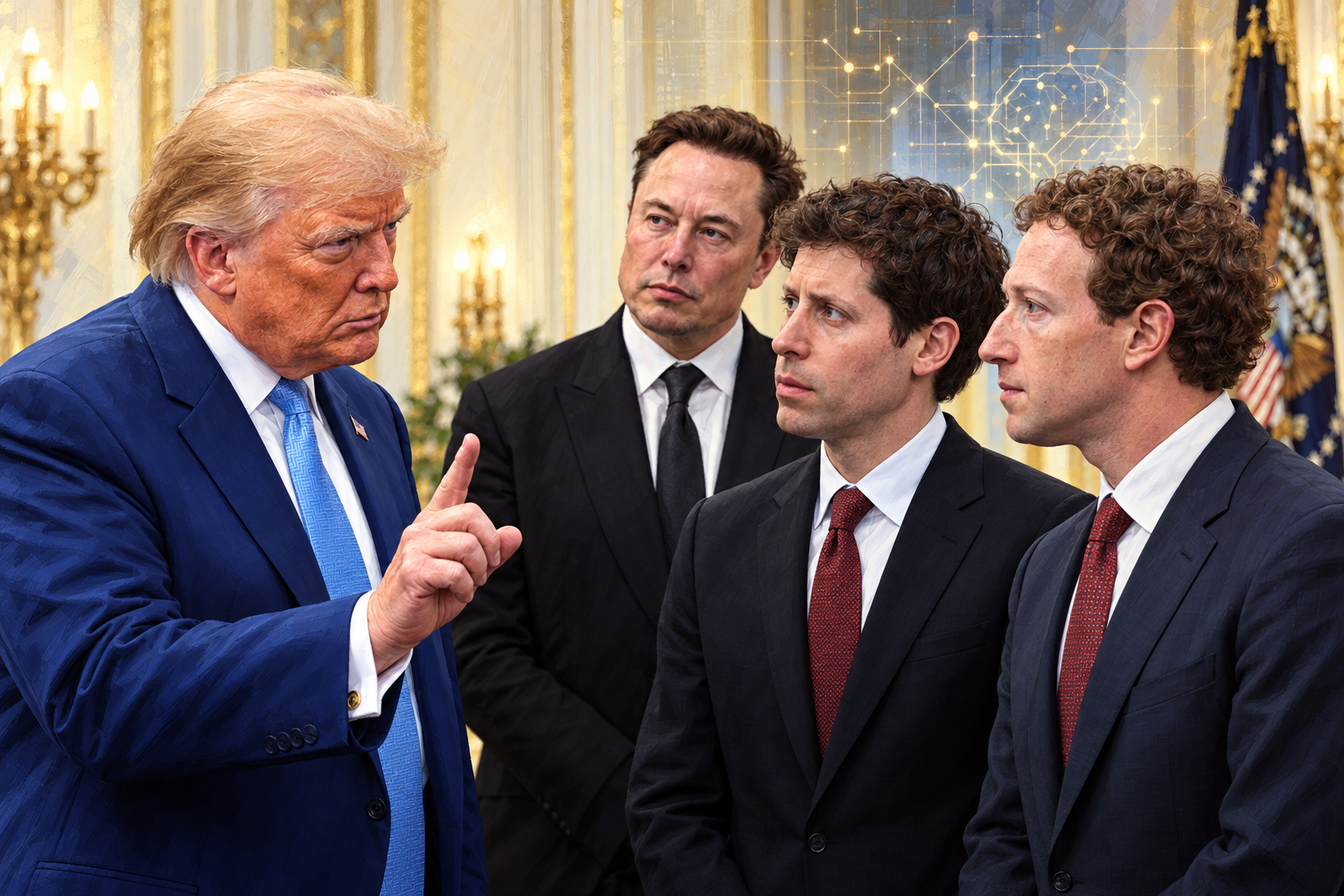
After all, Nobel Prizes have been awarded for raising awareness about global warming. By that logic, one might almost expect that someone like Donald Trump would at least receive a nomination for proposing counterbalances—however controversial. When one side of the debate is treated as untouchable doctrine, the other side quickly begins to look like heresy… until reality asserts itself.
Because here lies the uncomfortable truth: nature does not follow ideology.
In life, and apparently also in the environment, everything revolves around balance. Push too far—whether toward unchecked industrialization or toward uncompromising green orthodoxy—and the system reacts. Not with applause, but with correction.
When policy becomes religion, nuance is the first casualty. And nature, unlike voters, does not negotiate. It restores equilibrium.
Perhaps that is the real lesson, somewhere between a portion of fries and a television debate: environmental policy is not about purity. Not about absolutism. Not about moral superiority.
It is about balance.
And balance, by definition, requires more than one force.
Which may well be the most uncomfortable conclusion of all.
Lorem ipsum dolor sit amet, consectetur adipiscing elit, sed do eiusmod tempor incididunt ut labore et dolore magna aliqua. Ut enim ad minim veniam, quis nostrud exercitation ullamco laboris nisi ut aliquip ex ea commodo consequat. reprehenderit in voluptate velit esse cillum dolore eu fugiat nulla pariatur. Excepteur sint occaecat cupidatat non proident, sunt in culpa qui officia deserunt mollit anim id est laborum.
Receive Breaking News
Sign up for our newsletter and stay up to date! Be the first to receive the latest news in your mailbox: