

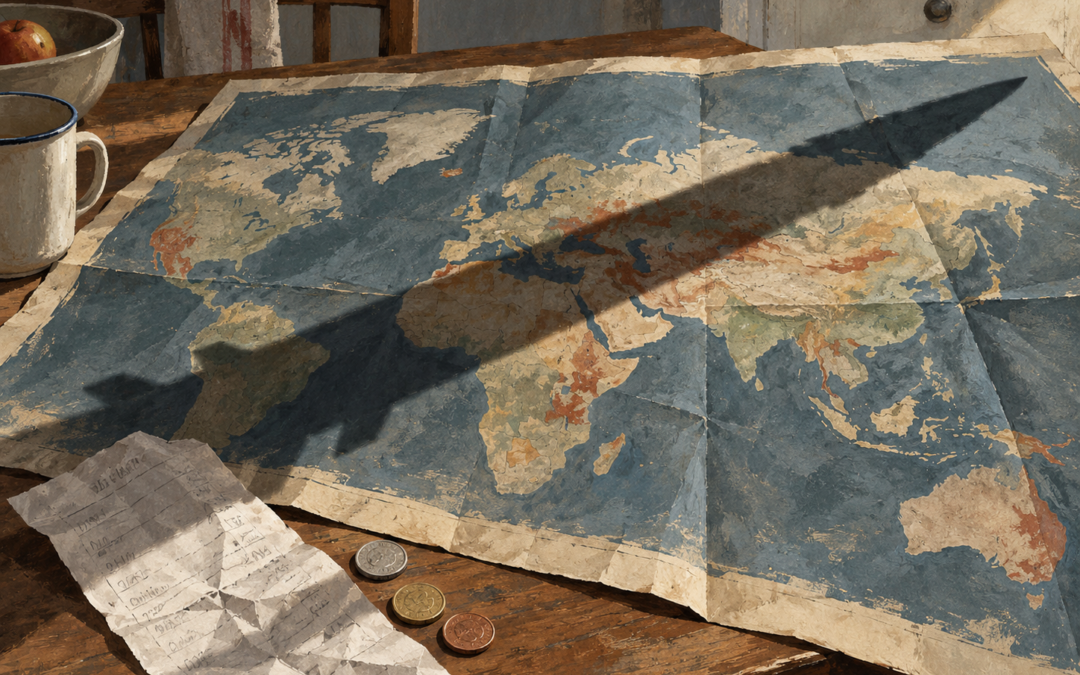
At election time, we are like a person standing in a forest, choosing a path without seeing the map. The easiest route may lead straight into danger. Before arguing about the cost of the journey, we need to know where we are going. That is the map missing from too much of our politics.
All eyes are on Hormuz. But the disruption did not begin with the latest tanker attack. Russia’s full-scale invasion of Ukraine in 2022 had already triggered a global energy crisis. Western sanctions and Russian gas supply cuts fractured energy trade; explosions tore through the underwater Nord Stream pipelines that September. Europe’s factories and households were paying the price years before Hormuz dominated the headlines.
Politicians and the public cannot understand today’s hardship by forgetting yesterday’s ruptures. Hormuz is the latest front in a struggle already being fought through energy, infrastructure and trade.
By 23 October, researchers had recorded 28 confirmed or reported attacks on commercial shipping in and around the Strait of Hormuz that month. The International Energy Agency describes the wider disruption as the largest oil supply interruption in history. A burning tanker becomes a higher factory bill, a dearer delivery, a smaller family budget. War reaches the kitchen long before an army reaches the border.
At least a dozen national elections are scheduled or expected across Europe by the end of 2027. America votes on 3 November, then enters the road to the presidential election of 7 November 2028. The governments chosen will confront nuclear proliferation, technological upheaval and rival powers testing Western resolve. We are choosing who will govern through a dangerous transition in world power.
Yet affordability threatens to consume the debate. In an August Reuters/Ipsos poll, 47 per cent of registered American voters named living costs as the single most important factor in their midterm vote. Their hardship is real. So is the danger of a politics that can explain the price of everything and the strategic cost of nothing.
Iran makes that danger concrete. Its support for Hezbollah, Hamas and the Houthis has sustained armed movements that terrorise civilians and destabilise states. After the American and Israeli strikes in February, Tehran attacked neighbouring Arab countries and moved to close Hormuz. The strategic message is unmistakable: if the regime cannot proceed on its own terms, it will make the world pay for obstructing it.
Now imagine that strategy protected by nuclear weapons. On 27 October, the IAEA chief told the UN Security Council that inspectors still could not verify the status of Iran’s previously declared highly enriched uranium, including roughly 440 kilograms. An unverified stockpile is not proof of a finished bomb. It is a warning that the most consequential questions remain unanswered.
Russia has already destroyed the comforting assumption that nuclear deterrence eliminates conventional war. A nuclear state can invade its neighbour while using the threat of escalation to constrain outside intervention. For a regime that sponsors terrorism, the same protection could offer something more sinister: a shield behind which proxies continue to kill. A nuclear weapon can serve aggression without ever being detonated.
Governments must help families pay their bills. They must also prevent hostile regimes from deciding what those bills will be. A country that accepts blackmail for cheaper energy teaches the blackmailer to demand more. Affordability without security is a temporary concession from whoever controls the pressure.
The world is already at war across connected fronts. Iranian drones used by Russia against Ukraine make the connection visible. Europe cannot treat the Middle East as somebody else’s problem while Iranian weapons help destroy European cities. The map does not respect the compartments in which politicians prefer to think.
Europe’s diplomatic divisions are equally costly. On 27 October, Finland’s Alexander Stubb and Norway’s Jonas Gahr Støre spoke to Vladimir Putin, then to Volodymyr Zelenskyy. Denmark criticised the initiative; Sweden questioned it. Europe cannot insist on shaping peace while remaining divided over the basic act of talking to the enemy.
An enforceable settlement of Russia’s war against Ukraine is a strategic necessity. It must give Ukraine the means and guarantees to resist another invasion. A settlement that merely gives Moscow time to rearm would prepare the next war. Diplomacy requires leverage, discipline and a destination. Indefinite confrontation is no substitute for a strategy.
Look east. A Chinese assault or blockade against Taiwan could pull the United States into conflict with a nuclear power of immense industrial capacity. If war in Europe remains unresolved, the same American forces, weapons and attention would face competing demands. Europe’s dependence could become its vulnerability at precisely the moment America had the least capacity to compensate for it.
Cheap drones and missiles have made disruption affordable even for weaker opponents. Defending every threatened route remains expensive. America cannot be the permanent insurer of every region. NATO’s collective-defence geography centres on Europe and the North Atlantic; it does not cover Taiwan. The alliance needs a serious review of responsibilities, industrial capacity and cooperation with Asian partners. Europe must build the power to defend itself.
That defence begins with knowing what deserves protection. Immigration policy must insist on respect for democratic law. Freedom of conscience, equality between men and women, and the right to criticise religion are foundations of a free society. Political Islamism must never be allowed to turn them into bargaining chips. A state that stops enforcing its principles invites others to impose theirs.
Samuel Paty was murdered in France for teaching freedom of expression. His classroom belongs on this global map. The murder sought to impose a veto on what a teacher could teach and what children could learn. Every retreat before such intimidation enlarges the authority of those who use it.
The revolutionary left attacks the foundations of prosperity whenever it treats economic success as guilt and confiscation as an economic programme. When it excuses theocratic violence in the language of liberation, it betrays the freedoms it claims to defend. The old communist promise has acquired a new vocabulary. It still cannot explain how destroying the creators of wealth will make everyone richer.
History supplies the warning. France passed from revolution and Terror to Napoleonic dictatorship. Russia replaced the tsarist order with a party state. The destruction of an elite did not abolish domination; it installed new masters. Today, technological innovators form a new centre of power. A society that drives out invention and enterprise will eventually buy its future from those that welcomed them.
By November 2028, AI and robotics may have transformed production and military power. Nobody can honestly put a guaranteed date on superintelligence. But the decisions taken before then could shape humanity’s future for generations. Human ambition does not need artificial consciousness to become murderous. The will to dominate already has a history. Powerful machines may give it unprecedented reach.
Europe risks becoming a wealthy spectator to its own decline: consuming technologies it does not control, relying on protection it cannot provide, and negotiating over principles it no longer confidently defends. Universal values lose their meaning when their defence stops at the point of inconvenience.
On 3 November, Americans will vote amid genuine hardship. The deeper question is whether their politics can connect that hardship to the freedoms, security and enterprise that make prosperity possible. The American dream cannot survive on purchasing power alone. It needs a country prepared to defend the conditions that created it.
What is war? It is the organised attempt to make other people live on your terms. It advances through invasion, economic coercion and terror. Its cheapest victory is to persuade a free society that defending its freedom costs too much.



Receive Breaking News
Sign up for our newsletter and stay up to date! Be the first to receive the latest news in your mailbox: