
American football and European soccer are both enormous sports businesses, but they are built on completely different financial foundations. The NFL is a closed American league with 32 protected franchises, shared national television money, no relegation, strict salary controls, and a business model designed to protect owner profitability. European soccer is a global sporting pyramid, where clubs compete across domestic leagues, UEFA competitions, transfer markets, sponsorship markets, and worldwide fanbases.
The key difference is not simply revenue. The key difference is how much of that revenue becomes stable profit.
European soccer is bigger as a worldwide cultural product. The NFL is stronger as a controlled financial machine.
For currency comparisons, euro figures below are converted at the European Central Bank reference rate of €1 = $1.1415.
The revenue comparison: NFL vs. Europe’s Big Five
The NFL now generates more than $23 billion in annual revenue. That makes it one of the most powerful sports businesses in the world, especially because all of that revenue is concentrated inside one league with only 32 teams.
Europe’s “Big Five” soccer leagues — the English Premier League, Spain’s La Liga, Germany’s Bundesliga, Italy’s Serie A, and France’s Ligue 1 — generated €20.4 billion in 2023/24. Converted into U.S. dollars, that is about $23.3 billion. The entire European football market reached €38 billion, or about $43.4 billion, but that wider figure includes more than just the top five leagues.
So in total revenue, the NFL and Europe’s Big Five are surprisingly close: roughly $23 billion versus $23.3 billion. But the per-team comparison is very different. The NFL has 32 teams, so $23 billion equals about $719 million per franchise. The Big Five have about 96 clubs, so $23.3 billion equals about $243 million per club.
That means the average NFL team generates almost three times more revenue than the average club in Europe’s Big Five leagues.
This is the first major conclusion: European soccer is larger as a global ecosystem, but the NFL is much stronger per team.
Profitability: where the NFL wins clearly
The Dallas Cowboys show how powerful the NFL model is. In 2025, the Cowboys were valued at $13 billion, with estimated annual revenue of $1.234 billion and operating income of $629 million. That implies an operating-income margin of roughly 51%. The average NFL franchise was valued at about $7.1 billion.
Now compare that with Real Madrid, the richest soccer club by revenue. Real Madrid reported 2024/25 operating revenue of €1.185 billion, or about $1.35 billion. That is actually slightly higher than the Cowboys’ revenue. But Real Madrid’s EBITDA was €243 million, or about $277 million, and after-tax profit was €24 million, or about $27 million. Its EBITDA margin was about 20.5%, while its net profit margin was only around 2%.
The accounting categories are not perfectly identical, so Cowboys operating income should not be treated as exactly the same measure as Real Madrid EBITDA or net profit. But the direction is obvious: the NFL converts revenue into owner profit much more efficiently than even the biggest soccer clubs.
That is the central business difference. European superclubs can generate NFL-level revenue, but they often spend heavily on wages, transfers, agent fees, stadium projects, youth academies, managers, and competitive pressure. The NFL is designed so owners make money more consistently.
Why the NFL model is financially stronger
The NFL is a closed league. There is no promotion or relegation. No outside team can fight its way into the NFL. No NFL team can fall into a lower division. This makes every franchise a protected asset.
The league also shares national media revenue equally. In the Green Bay Packers’ latest public financial report, each NFL team received $432.6 million in national revenue sharing, mostly from television contracts. The Packers reported total revenue of $719.1 million and operating profit of $83.7 million.
That means even a small-market NFL team begins each year with hundreds of millions of dollars in shared league revenue before adding local sponsorships, tickets, premium seating, concessions, merchandise, and stadium income.
European soccer is much less equal. A club like Real Madrid, Manchester City, Barcelona, Bayern Munich, Paris Saint-Germain, Liverpool, Arsenal, or Manchester United operates on a completely different financial level from most clubs in its domestic league. Research by Tifosy Capital & Advisory found that the top-to-bottom revenue gap in major North American leagues was about 2.6 times, while in European football it was about 11.6 times. In France, PSG’s revenue was more than 20 times that of Nîmes in the period studied.
This inequality creates pressure. Smaller European clubs overspend to avoid relegation. Bigger clubs overspend to qualify for the Champions League or win trophies. Owners often accept lower profits because sporting success, prestige, and global status matter so much.
The NFL’s logic is different: protect the league first, protect the owners second, and let competition happen inside a controlled system.
Salary caps: the biggest financial difference
The NFL has a hard salary-cap system. For 2026, the NFL salary cap was set at $301.2 million per team, the first time it passed $300 million.
That cap changes everything. A team can pay a superstar quarterback $55 million or $60 million per year, but that contract must fit into the same team payroll structure as everyone else’s roster. The cap forces trade-offs. If a team pays too much to one player, it has less room for offensive linemen, receivers, defensive backs, pass rushers, and depth.
European soccer does not have an NFL-style salary cap. UEFA now uses a financial sustainability rule called the squad-cost rule. From 2025/26, clubs are supposed to limit spending on player wages, coach wages, transfer amortization, and agent fees to 70% of club revenue.
That is not the same as an equal salary cap. In the NFL, the Dallas Cowboys and a smaller-market team operate under the same cap. In European soccer, Real Madrid can spend far more than a mid-table Spanish club because Real Madrid earns far more revenue. UEFA’s rule controls excessive spending, but it does not create NFL-style equality.
Deloitte reported that Big Five clubs had wage costs of €13.1 billion in 2023/24, equal to 64% of revenue. Converted into dollars, that is about $15 billion in wages. Their aggregate operating profit was only €0.6 billion, or about $685 million.
That shows the wage problem clearly. European soccer creates massive revenue, but a huge share is consumed by player wages and squad-building costs. The NFL limits that problem through collective bargaining and a hard cap.
MLS: the American soccer hybrid
Major League Soccer is not financially built like the Premier League or La Liga. It is much closer to the American model. MLS uses salary budgets, roster rules, allocation money, and special exceptions to control costs.
For 2026, MLS lists a club salary budget of $6.425 million, with a maximum salary budget charge of $803,125 for an individual player. But MLS also allows Designated Players, whose compensation can exceed the normal salary budget charge.
That is how MLS can have Lionel Messi earning far above the normal salary structure while the league still keeps most spending controlled. MLS is trying to do two things at once: maintain NFL-style financial discipline and still participate in the global soccer star market.
This makes MLS a hybrid. It is not as financially open as European soccer, but it is not as rich or mature as the NFL.
Current financials generated by U.S. soccer teams
U.S. soccer is growing quickly, but its current team financials remain much smaller than the NFL. MLS clubs do not all publish full audited profit-and-loss statements, so the best public view comes from sports-business estimates by groups such as Sportico and Forbes.
Sportico’s 2026 estimates put total MLS club value at about $23 billion across 30 teams, with an average club value of $767 million. Inter Miami leads at about $1.45 billion, followed by LAFC at $1.4 billion, LA Galaxy at $1.17 billion, Atlanta United at $1.14 billion, and New York City FC at $1.12 billion.
That is serious growth. But the NFL comparison is still brutal. The average NFL team is worth about $7.1 billion, while the average MLS club is worth about $767 million. In other words, the average NFL franchise is worth more than nine times the average MLS club.
The revenue gap is also large. Forbes’ 2026 MLS figures list Inter Miami at $200 million in annual revenue and $50 million in operating income. LAFC is listed at $167 million in revenue and $14 million in operating income. LA Galaxy is at $106 million in revenue and $2 million in operating income. Atlanta United is at $105 million in revenue and $10 million in operating income. Seattle Sounders are at $100 million in revenue and $3 million in operating income. Some major clubs are still estimated to be losing money, including NYCFC, Columbus Crew, FC Cincinnati, and San Diego FC in that Forbes sample.
Forbes’ top ten MLS clubs together generated about $1.117 billion in revenue and about $49 million in combined operating income. That is an operating margin of roughly 4.4%.
Now compare that with the Dallas Cowboys alone. The Cowboys generated about $1.234 billion in revenue and $629 million in operating income. One NFL team generated more revenue than the top ten MLS clubs combined, and more than 12 times their combined operating income.
This does not mean MLS is failing. It means MLS is still in a growth-investment phase. Club values are rising faster than current profits because investors are betting on future upside: Messi, the 2026 World Cup, Latin American fan growth, younger fans, soccer-specific stadiums, streaming, and global interest in the U.S. market.
MLS sponsorship is one clear area of progress. Team-level sponsorship revenue reached an estimated $716 million in 2025, up 8% year over year.
The weak point is still media revenue. Sportico-based reporting noted that MLS clubs net only about $5 million per team from Apple after production costs, compared with about $40 million per NHL team. That shows why MLS valuations can be exciting while operating profits remain modest.
Women’s soccer also matters in the U.S. financial picture. The NWSL is far smaller than MLS, but it is growing quickly. Sportico’s 2026 NWSL estimates value Angel City FC at $335 million, Kansas City Current at $315 million, Bay FC at $208 million, San Diego Wave at $200 million, and Washington Spirit at $196 million. The average NWSL club was valued around $184 million, and the 14 teams together were worth about $2.6 billion. The league’s current television package is worth about $60 million per year.
The conclusion from U.S. soccer team financials is clear: MLS and NWSL are now real sports assets, but they are still far behind the NFL in revenue, profit, and media power. Their valuations are based not only on current income, but on the belief that soccer in America has not yet reached its ceiling.
Famous player salaries: soccer wins at the very top
Player salaries show another major difference between the systems. The biggest soccer stars can earn more than the biggest NFL stars because soccer fame is global and because soccer does not have one universal hard salary cap.
Cristiano Ronaldo is estimated at about $300 million in annual total earnings, including about $235 million on-field and $65 million off-field. Lionel Messi is estimated at about $140 million total, with about $70 million on-field and $70 million off-field. Karim Benzema is listed at about $104 million, Kylian Mbappé at about $95 million, and Erling Haaland at about $80 million.
The biggest NFL contracts are enormous, but they are compressed by the salary cap. Dak Prescott is listed at $60 million per year in average annual contract value. Josh Allen, Joe Burrow, Trevor Lawrence, and Jordan Love are each around $55 million per year.
That comparison is striking. Ronaldo’s estimated $235 million on-field earnings are almost four times Dak Prescott’s $60 million annual contract value. Messi’s estimated $140 million total earnings are more than double the top NFL quarterback annual range.
But this does not mean soccer is healthier financially. It means soccer’s biggest global icons can capture extraordinary money. The NFL spreads money through a controlled roster system; soccer allows more extreme superstar earnings.
MLS salaries are much smaller than top European or Saudi-linked soccer salaries, but Messi changed the scale. The MLS Players Association lists Messi at $25 million in base salary and about $28.33 million in guaranteed compensation with Inter Miami. Son Heung-min is listed at about $11.15 million guaranteed compensation with LAFC, Rodrigo De Paul at about $9.69 million, Hirving Lozano at about $9.33 million, and Thomas Müller at about $5.15 million.
This tells us something important: in Europe and Saudi Arabia, the biggest soccer stars can earn more than NFL players. In MLS, only a small number of stars reach elite pay levels, while the league keeps most salaries tightly controlled.
The world-champion effect: Messi changed U.S. soccer interest
Lionel Messi’s move to Inter Miami is the clearest example of how a world champion can influence American interest in soccer.
Messi did not arrive as just a famous player. He arrived as the captain of Argentina’s 2022 World Cup-winning team and one of the most recognizable athletes on earth. That gave MLS something it had never truly had before: the active face of world soccer playing weekly in the United States.
The commercial effect was immediate. Nielsen analysis reported that Messi’s Inter Miami debut in the Leagues Cup produced a 173% increase in linear viewership compared with the tournament average. The same reporting found that the North American soccer fan base grew to more than 136 million, with the U.S. alone having about 62.5 million soccer fans.
Messi also changed Inter Miami’s financial profile. Sportico estimated Inter Miami at $1.45 billion, making it the most valuable MLS club. Another Sportico-based report projected Miami revenue at $250 million in 2026.
That is the power of a world champion. Messi did not just sell tickets. He brought sponsors, streaming attention, merchandise sales, celebrity visibility, global press, and credibility. He made MLS feel relevant to people who previously ignored it.
But there is still a difference between attention and permanent loyalty. A Messi match can bring a huge audience. The harder task is turning those viewers into regular MLS fans who watch every week, buy merchandise, follow local clubs, and treat soccer as part of the normal American sports calendar.
Latin American immigration gives U.S. soccer a natural base
The growth of soccer in the United States is not only about Messi, MLS, or the World Cup. It is also about demographics.
The U.S. Latino population reached about 68 million in 2024, roughly 20% of the country. Pew Research also found that about 22.7 million U.S. Hispanics are immigrants. People of Mexican origin are the largest group at about 40 million, and there are also large communities with roots in Puerto Rico, Cuba, El Salvador, the Dominican Republic, Guatemala, Colombia, Honduras, Venezuela, and Ecuador.
This matters because many Latin American communities already bring soccer culture with them. Soccer is not something that needs to be explained. It is tied to family life, national identity, Spanish-language media, weekend routines, neighborhood culture, and emotional links to home countries.
Mexican-American fans may follow Mexico, Club América, Chivas, Tigres, or Liga MX. Argentine fans may follow Argentina, Boca Juniors, River Plate, Messi, or European clubs. Colombian, Salvadoran, Honduran, Guatemalan, Venezuelan, and other communities bring their own national teams, club loyalties, and viewing traditions.
This is a huge advantage for U.S. soccer, but it is not automatic for MLS. Many Latino soccer fans already have deep loyalty to Liga MX, South American clubs, Real Madrid, Barcelona, Manchester United, Liverpool, or national teams. MLS must earn those fans through quality, atmosphere, identity, and authenticity.
The commercial potential is real. Nielsen found that Hispanic World Cup fans were more than twice as likely as the total U.S. population to have purchased MLS or team gear in the previous 12 months.
That means Latin American immigration does not just create viewers. It creates consumers: people who watch matches, buy shirts, attend games, follow players, and pass soccer culture to their children.
Can soccer profit from a breakthrough in the United States?
Yes. A U.S. soccer breakthrough could be extremely profitable. But the profits would not go to one single league.
MLS would benefit through higher club valuations, better sponsorships, stronger media rights, more ticket revenue, more stadium income, more merchandise sales, and more valuable academies. NWSL would also benefit, especially as women’s soccer continues to attract investors and television partners.
European clubs would benefit too. A bigger American soccer audience means more U.S. fans paying for Premier League, Champions League, La Liga, Serie A, Bundesliga, and club-specific content. It also means more summer tours, more U.S. sponsorship deals, more jerseys sold, and more American investors buying stakes in European clubs.
Liga MX would also be a major winner because Mexican-American fans are one of the strongest soccer audiences in the United States. FIFA and CONCACAF would benefit from tournaments. Broadcasters, streaming companies, apparel brands, stadium owners, youth academies, and sponsors would all have upside.
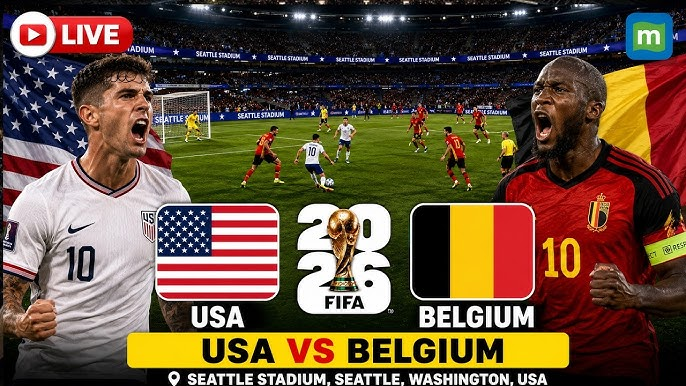
The 2026 World Cup gives soccer an enormous chance to accelerate this process. Soccer can already create major American television events. One U.S. men’s World Cup match in 2026 drew 24.4 million English-language viewers, with a peak of 31.8 million. But the NFL still operates on another level: the 2025 Super Bowl averaged 127.7 million viewers.
That comparison is important. Soccer can produce huge events in America, but the NFL still dominates weekly sports culture. The breakthrough for soccer would not mean replacing the NFL. It would mean becoming a much stronger second football economy alongside it.
Final comparison
The NFL is the better financial machine. It has a closed league, no relegation, equal national media sharing, a hard salary cap, huge domestic television contracts, and owners who benefit from stable margins. Its average franchise value of about $7.1 billion shows how powerful that structure is.
European soccer is the bigger global cultural product. Its best clubs can generate more than $1 billion per year, and its biggest stars can earn more than any NFL player. But the system is less equal, less controlled, and more exposed to wage inflation, transfer spending, and relegation pressure.
MLS is the bridge between the two systems. It uses American cost controls, but it needs global soccer credibility. Messi proved that one world champion can change interest, viewership, sponsorship, and club value. Latin American immigration gives soccer a deep cultural foundation in the United States. The 2026 World Cup gives the sport another powerful push.
The best financial future for soccer in the U.S. is not to become the NFL. It is to become a strong, profitable, multicultural, global-facing sports economy of its own. The NFL can remain number one, while soccer still becomes far bigger than it is today. If MLS, NWSL, European clubs, Liga MX, and broadcasters can convert U.S. interest into weekly habits, the United States could become one of the most valuable soccer markets in the world.


Receive Breaking News
Sign up for our newsletter and stay up to date! Be the first to receive the latest news in your mailbox: