
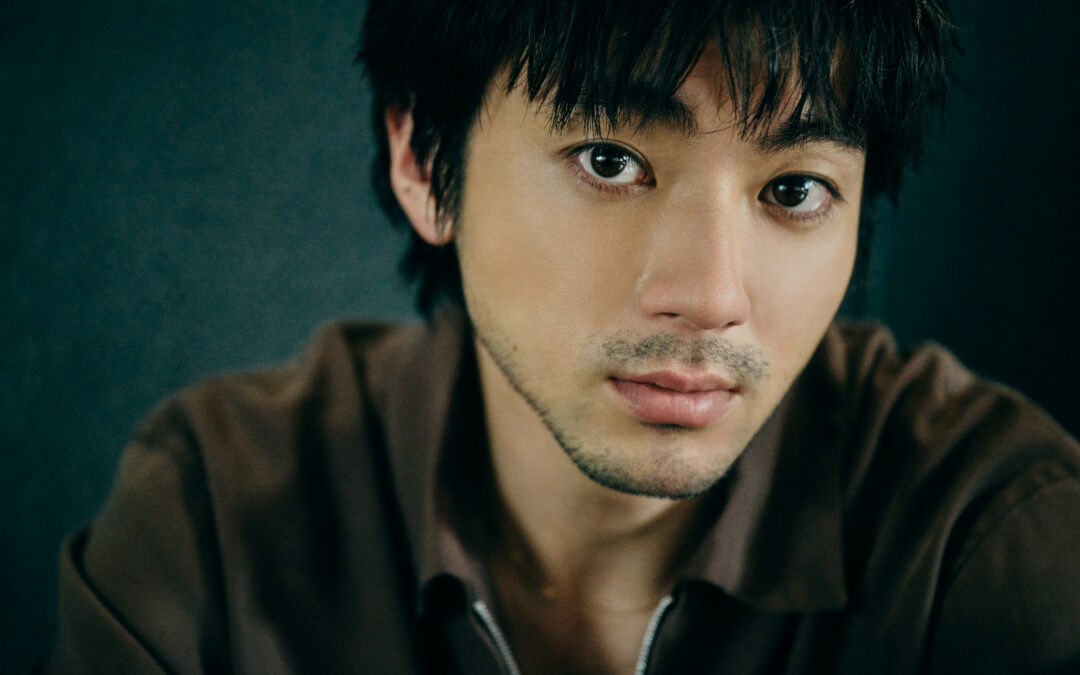
Song of the Samurai has found audiences far beyond Japan. Why do you think international viewers are reconnecting with samurai storytelling today?)
I don’t think there’s one clear answer. But I do think that the image of “Japan equals samurai”, in recent years, expanded in more diverse ways through history, film, television, and other forms of entertainment.
What people may be responding to is the samurai philosophy around death—not just how they lived, but how they faced the end of their lives. There is a certain beauty and dignity in that way of thinking. I believe that kind of human ideal isn’t unique to Japan; it’s something that can resonate with people around the world.
- Did you expect the series to resonate so strongly outside Japan?
Honestly, not at all. It was completely unknown territory for me. I was confident that, with this team—the cast and crew—we could create something truly special. But at the same time, I also had moments of doubt, wondering, “Can I really pull this off?” There was definitely a sense of anxiety about whether I was capable of carrying a project of this scale.
- Many viewers describe the show as emotionally intense rather than purely action-driven. Was that balance important to you as an actor?
I don’t really see action as simply “action,” or just physical movement.
To me, every swing of a sword has meaning behind it. If I dodge an attack, then in that moment I’m already thinking, “From this position, where would I strike next?” There is always an emotional and psychological connection behind the movement.
In that sense, action is completely connected to acting.
So I never consciously thought about balancing the two. Action itself is a form of emotional expression. The way a character moves tells you who they are. That’s what I focused on throughout the performance.
- Toshizo Hijikata is both admired and controversial in Japanese history. How did you approach portraying such a complex figure?
My starting point was always respect for the original manga.
Beyond that, I never approached the story through a simple lens of good versus evil. In any conflict, I don’t believe one side is ever 100 percent right or wrong. Everyone was trying to protect something—whether it was their country, their family, or the people they cared about. The reason admiration and controversy coexist around historical figures like Hijikata is because they were human.
Personally, I’ve often felt that if I had been born into different circumstances or met different people, I could have gone down a very different path myself. Since none of us actually witnessed history firsthand, all we can do is imagine: “Maybe this is what it was really like.” That’s a very natural way for me to approach a role. So when I played Hijikata, I tried to focus on that very real human complexity rather than portraying him as a straightforward hero or villain.
- What aspect of Hijikata’s personality did you most want audiences to understand?
I think one of the most relatable things about Hijikata is how he changes over time.
Hijikata started out as a baragaki—a reckless young man who fought alone and had no one but himself. But once he found comrades and the Shinsengumi began to grow, he also began to understand the fear of losing the people he cared about. I think that human side of him is something modern audiences can relate to as well.
In some ways, people who stand alone can be very strong. But there is only so much one person can accomplish by themselves. To achieve something truly significant, you need companions who share the same passion and are willing to fight alongside you.
When Hijikata met Isami Kondo and began striving to become “the strongest,” that desire was actually very natural. It’s no different from how we actors want to meet great collaborators, create something meaningful together, and push each other to become better at our craft.
The difference is that, in their time, they had to risk their lives every single day to prove it. They had to cross swords and face death. I hope audiences can feel not only the cruelty and fragility of that reality, but also the genuine passion and intensity with which they lived, even if only for a moment.
- What makes Japanese storytelling emotionally or culturally different from Western productions?
My impression is that many Western stories tend to draw a clearer line between “good” and “evil,” and often focus on the idea that defeating evil is the right thing to do. Of course, I know that’s not true of every Western work, but that’s the general image I have. Japanese stories often look at people and situations from multiple angles.
Even when someone is considered a villain, we tend to ask, “What kind of circumstances led them to become this way?” And even the people fighting on the side of justice are often shown struggling with questions like, “Is this really the right thing to do?” In Japan, we have a saying called kenka ryoseibai, which roughly means that both sides share responsibility in a conflict. Japanese storytelling often starts from the idea that, once people stand on a battlefield, both sides are wrong and both sides are right at the same time. How they got there is a separate issue.
Rather than dividing people neatly into good and evil, Japanese stories tend to portray them as complex human beings, and explore the beauty and pain that come from that complexity. I think that’s one of the things that makes Japanese storytelling unique.
- Were there particular historical sources, films, or performances that influenced your interpretation?
Only the original manga, “Chiruran: Shinsengumi Requiem.”
I deliberately avoided watching any other versions or interpretations. If I watch another performance and think, “That’s really good,” I might unconsciously start copying it. I didn’t want that to happen.
So I chose to focus entirely on the world of the original work and build my own version of Hijikata from there.
- The sword choreography feels highly cinematic yet realistic. How demanding was the physical preparation?
Compared to actors working overseas, the reality is that in Japan we often don’t have the luxury of spending a huge amount of time preparing for a role. Even so, the staff did everything they could to create an environment where we could perform at our best. After that, it came down to our own effort.
If people feel that the action in this series looks authentic, I think part of the reason is the experience I’ve built up over the years, as well as my belief that movement itself is a form of emotional expression. I don’t see action as just choreography or technique. I see it as an extension of a character’s heart and emotions. I think the way I’ve lived my life so far has helped me express that.
- What did playing Hijikata teach you personally?
Putting the historical figure aside for a moment and focusing on the character in the series, there’s a line Hijikata says after meeting Kondo: “Doing what no one else can—that’s what makes you a badass.” To be honest, that line hit me harder than anyone else.
It made me ask myself, “Am I really burning this brightly right now?” and “Am I doing something that no one else can do?” As an actor, I always try to give 100 percent to every project. But there are times when I feel weak and wonder if I’m just another cog in the machine.
Because of that, ever since filming began, I’ve kept telling myself, “Today, I’m going to do something no one else can do.” That mindset came directly from that line. It’s something I learned from this role.
- Did the role change your understanding of discipline or loyalty?
My way of thinking hasn’t really changed. For me, the most important thing is whether discipline and loyalty are supported by genuine feeling and conviction.
I can’t accept discipline or loyalty that exists purely for control or domination. No matter where you are or what kind of environment you’re in, people should be free regardless of age. If a system exists to support that freedom, then discipline and loyalty will naturally follow. If you’re surrounded by people who genuinely look up to you, there shouldn’t be any need to bind them with harsh rules.
That’s why, through this role, I was reminded of the tragedy of the Shinsengumi having to create the Kyokuchu Hatto—their strict code of conduct—in the first place. To me, loyalty should be something that comes from the heart, something you choose to devote yourself to because you truly believe in it.
That belief hasn’t changed, even after playing this role.
- If you could portray any other historical Japanese figure, who would it be?
Kotaro Fuma.
Partly because I’d love to play a ninja, but also because I’m drawn to mysterious characters. I’ve also played Miyamoto Musashi once before on stage, but I’d love the chance to take on that role again in a film or television project.
- What are your thoughts on the current state of Japanese entertainment as it expands onto the global stage?
This is just my personal feeling, but for a long time I would watch overseas films and think, “Incredible things are happening in the outside world” Japanese anime and games have long been loved around the world, but as live-action actors, many of us felt like we were lagging behind. Somewhere in the back of my mind, I think I believed, “That kind of success isn’t possible for us.”
But when I had the opportunity to work on Godzilla Minus One, I could feel the determination of everyone involved to create something that would reach the world. Then, when it won the Academy Award for Best Visual Effects, it made me think, “Japan can do it too.”
Later, when I interviewed Joaquin Phoenix and Lady Gaga for Joker: Folie à Deux, I realized that the passion they have for acting is exactly the same as ours. That experience made me stop and think. Maybe I was the one creating distance. Maybe I was the one making the gap between Japan and the rest of the world seem bigger than it really was. It made me feel that the world might actually be much closer than I had imagined.
Now I think more and more people in Japan are beginning to feel the same way. We’re starting to create projects with a global audience in mind. The mindset is definitely changing. Rather than saying, “We can do it,” I think I’ve finally reached the point where I can say, “I can do it.”
- What kind of projects are you hoping to explore internationally in the future?
A little while ago, I missed out on an opportunity that could have changed my life.I was honestly devastated.
But because of that experience, I also realized something important: appearing in English-language productions isn’t the only path forward. Looking back, I think it was a turning point in my life.
What I feel strongly now is that I want to help create works that spread throughout the world—works where people everywhere can hear Japanese being spoken, and where children overseas start repeating Japanese lines they heard in those stories. Japan has so many incredible creators and performers. Rather than showing the version of Japan people already imagine, I want to share a Japan that audiences discover through the stories themselves—a real Japan they come to know for the first time through our work.
That’s the kind of future I hope to be part of.
- Finally, what do you hope global audiences remember most after watching Song of the Samurai?
First and foremost, I want people to hold on to whatever feelings they experienced while watching the series. That emotional response is the most important thing.
If I could ask one thing of the audience, it would be this: I hope they find the courage to live life on their own terms—to protect their families and friends, to avoid judging others too quickly, and to find happiness in living freely as themselves while doing what only they can do. If this series can give someone even a brief moment of excitement or inspiration, that would make me very happy. I hope viewers can discover the true joy of being alive—and a way of living that makes them think, “That’s really cool.” If they can find even a piece of that within Song of the Samurai, then I think that would be the best outcome of all.



Receive Breaking News
Sign up for our newsletter and stay up to date! Be the first to receive the latest news in your mailbox: